The rose is without doubt the queen of flowers. That rose to the imagination, evident from the many legends, tales and proverbs which this flower is involved. In the garden, the rose both literally and figuratively at the center of attention. Whether a large flowered, old English rose, or a fast-growing wild rose.
There are thousands of species and varieties of roses. Yet growers constantly looking for even more beautiful and more colorful roses. This search also covers the health of roses. For as the saying no roses without thorns indirectly suggests, the rose also has a flip side of the coin. Star mildew and black spot sometimes disfigure the rose bush. A good rose should not only be beautiful, but also strong.
Roses can be divided into different groups. Uniformity is often hard to find. See you after a few gardening books that you will have more than once rose another grouping found. This classification is based on several reference works, but perhaps she is still open to debate.
The family belong to the large pink roses with a 150 species spread throughout most of the temperate regions. In Europe about 40 species. For thousands of years roses are placed by people in their gardens.
The rose became the "Queen of flowers'.
Depending on this division also rose is also the way a rose is pruned, linked.

The planting time:
This happens on most soils best in the autumn. On very wet soils better in the spring. The best months for planting are November and March, but is available from mid October to late April.
Against plants in winter is no objection as long as the soil is not frozen or snow is wet.
To be planted in late April, it must be carefully molded.
You can also roses in container (black plastic pots) purchases. Such roses are more expensive than bare root. Container Roses roses make it possible at any time to plant, even in full bloom in midsummer.
Beat the pot gently from the root ball so that your roses without root damage in the planting hole to plant. Thus one can corner in the garden soon giving a colorful facelift.
Planting Distances:
Polyantha and hybrid roses are planted at distances of 35-45 cm, depending on vigor.
Climbing roses at 3 to 4 meters (along a fence for example).
Roses on stem 80-100 cm.
Tillage and soil:
In a normal maintenance garden will usually be sufficient to separate the soil before planting to work with a spading fork or spade. Land that has not previously been used for stabbing two may well be deeply omgepit carefully. In addition to topsoil (up to 25cm) and subsoil (25-50cm) dug, both layers remain at their original location.
The substrate is thus not brought up.
 The
groundwater level is high then puts it level with the low water level
coarse gravel or rubble height of 10 cm thickness and one on the ground
so much, that above a growing layer is at least 60 cm. The presence of water is the main obstacle to the development of a rose crop. This also applies to dry sandy soils.Heavy
clay soil that is too fine grained, is mixed with river sand, leaf mold
and peat moss or compost to the soil looser to make.Scanty, poor sandy soils humus improves it by addition of peat (or peat), clay, leaf mold and (or) compost.In peat soil can make some sand.When
conditions permit, the best soil in the spring before the autumn when
the roses will be planted will be edited or turned over. Then the manure through the soil to work.Roses require a well drained, humus-rich, nutritious and slightly calcareous soils.
Fertilization:
Roses like a fertile soil. So heavy fertilizing.On light sandy soils are preferred for well-rotted manure or dried cow manure (organic fertilizer).In the absence of natural manure can also use special rose fertilizer. These fertilizers are richer in nutrients than organic fertilizers, but the latter is preferable because they humus in the soil and improve its structure.The preference goes to natural manure or organic fertilizers such as dried cow dung, humosmo, Viano, ... Not for nothing it fits into all major rose gardens this system.
After ridging in autumn, the cow manure in the pits laid. In the spring, when afaarden, the largest chunks of dung which piece and worked very slightly below.
In summer, after the first bloom, the roses desire for a summer fertilization.This may require different kinds of fertilizer use. Working effectively yielded a blood donation, horn and bone. Many rose enthusiasts write results to lend their good flowering.
One can usually rose up to 12 years in the same place to grow.Would it then in the same place again build a rose garden, one has to do with the so-called "pink fatigue, mainly due to the nematode 'Pratylenchus penetrans.
Read more on our website on soil exhaustion of roses, chemical and biological control treatment.
Charles austin roses love sunshine and a light stand.
Limits or edges that lie on the north side are too cold.In very sunny places however it is best NOT OLD FASHIONED red varieties used - the petals of which are sensitive to sunlight and they will soon fade purple.
By large-flowered climbing roses blooming without objection along south walls but also led them to be better than pink or white breeds.Red have to harvest and especially in the west more to their liking.In general, roses are not shaded. In the botanical roses there are species that thrive only in the shade. Hybrid roses require full sun. Polyantha arranging roses are still in partial shade. The shadow of a house is less objectionable than that of trees, whose roots also compete with those of the roses with water and food to the soil extract.

 Roses vary greatly in shape. Of
the wild, single-flowered rose with its 5 petals to the large, double
flowers which we in modern hybrids and traditional cultivars able to
find:
* Flat or open flower form:
Usually these are just a few flowers with 5 leaves, or semi-double flowers with distinctive petals flat. Occurs primarily in wild roses.
* Bell-shaped flower form:
His open, the councils are competing to see the heart. They can only, half full, stuffed or double-filled. The petals are bent outward.
* Pointed flower shape:
These flowers are elegant, pointed buds and can be filled or half filled, and this with a high heart. This flower shape is typical for Tea Hybrids.
* Urnvormige flower shape:
This is also in flower shape for Hybrid Tea, with a more curved shape and a flat top. They can be half full, stuffed or double-filled.
* Round flower shape:
These flowers form a dense, rounded form and filled or filled with double overlapping petals of equal size.
* Rosette flower shape:
This massive double flower filled or filled and often has a flat shape with masses overlapping petals of unequal size.
* Quartered flower form:
This is quite remarkable bloemmet numerous unequal petals grouped into 4 squares. The flower is often flat or double stuffed and filled.
* Pompon Flower form:
These small, round or double flowers are stuffed full of numerous, equal petals.
(Literature flower shapes: Pink Encyclopedia - ISBN 0 029 90410 1)
Thoma sick rose graham seen a commercial for your garden and the rose. The queen of flowers gets more difficult its status as the most popular garden plant coverage.
The causes are known: powdery mildew (white rot), stellar black spot and rust.
In the nurseries during the growing phase, these diseases effectively with chemicals contested. But once the roses have left the farms? Syringes in public parks is not done. Susceptible cultivars are removed as soon as possible. If they are replaced will be asked to healthy lasting cultivars. Even yourself, becoming more environmentally conscious, it is increasingly unwilling to chemical spraying against diseases.
Plant Publicity Holland (PPH) also already stated in its publications more attention to the disease susceptibility of the crop. The Dutch information and knowledge (IQC) has a survey of the rose growers to the sensitivity of the rose varieties to diseases. The goal is to inform the spotlight on healthy cultivars and thus susceptible species to supplant. The VKC-examination, the health aspect emphasized by the total number of points (100), whereby:
40 be given to health20 to shape and color of the flower20 to fruition richness10 with vigor10 to clean-.
At the All-German-Deutsche Rosenneuheitenprüfung (ADR) rose health inspection weighs heavily, lost roses there for three years should not be painted.
Eventually the whole story begins with the breeder who breeds too long on color and shape of the flower. The smell has now been rediscovered again, but the health of the rose is far too long been neglected.
What is a good rose?
Ask again in three different rose growers. Do not be surprised to get 4 different answers. In evaluating a pink cultivar running thoughts sometimes far apart. This is not surprising because, the perfect rose does not exist. Each rose is a compromise of some properties. Typically, this return to one of the properties and scoring less well. Fragrance, flower richness, vigor, they are all important.
All this is why roses Catalogues at home and abroad so very different. In other countries the emphasis is on providing alternatives to susceptible crops.
In almost every catalog you can still find two classic roses for their sound growth are advertised, these are:
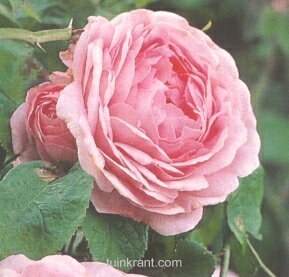
Rosa 'Dame de Coeur' - large flowered (shown here)
Rosa 'The Fairy' - small-flowered
(Literature: Contact - aug.1997 - Study Circle Nursery School)
Meilland Regatta
By flowering shrub roses for small gardens and large:
Sometimes you see those fast-growing, soft roses in gardens and parks become veritable flowering shrubs unparalleled. Among experts, these shrub roses "landscape roses" called. " As striking colors she gardens, parks and gardens. Particularly the flowering shrub roses because of their ease of growth and rich flowering hits in any garden.
ln all shapes and colors:
When the sun high in the sky in June, the roses begin to bloom. June is indeed the perfect pink month. Climbing roses perfume spray clouds in the sky, bedding roses folding their buds open and a single shrub rose is a beautiful focal point in a front yard. Shrub or bush roses are sturdy, strong branching shrubs.
Some are two meters high and wide, other dimensions remain modest. But all they have in common that they are without too much pruning can claim a place in gardens and parks and gardens in parks and park. You can find them with flowers in every color and growth habit can be very different. Besides the more upright types are graceful overhanging shrub roses and shrub roses acclaimed for their ground-covering properties. The broad, relatively high among the types of shrub roses are holding their own borders and as specimen shrubs in a lawn. The spreading shrub roses are very suitable for low hegjes and give an accent to herbaceous borders and ground cover roses grow on slopes and hills are beautiful in flight and at roadsides.
By their strong, smooth and disease free growth, you do not need a lot of plants and you do not even gifspuit to handle. Moreover, they are perfectly hardy and oppress them with their luxuriant foliage all weeds. Even on poor soil, they will become magnificent roses. Often, shrub roses and ongedwongens something very natural. They have nothing of, stiffness of bedding most roses.
Shrub Roses practical:
Because of the broad-based growth, there are only a few roses per m2 required: two to four roses is enough. That's very economical. Pink boots on bare roots can be planted from November to March. It is recommended for bare root roses early in the planting season to plant. In container (pot) grown roses can generally be planted throughout the year. Plant them so deeply that occulatieplaats, the node from which the branches grow about 5 cm below the surface is. In autumn it is advisable to ground the shrub roses and fertilizer to the soil to make such a layer of manure. In the trade, special rose fertilizer available. In spring, the flowering shrub roses pruned. Ground cover can be pruned quite low. Higher shrub roses are pruned to 40 cm. During the flowering season the overblown bunches removed.
In September is no longer necessary. The last flowers will often grow into the bush rose hips in winter ornamental value business. In parks and along roads, the ground cover roses mechanically pruned every three years.
A nice selection of shrub roses:
The following shrub roses have proven their value. They are perfectly healthy and flourish, if overblown bunches are cut away, of early in the season to deep pink in autumn:
'Bonica 82' has beautiful bright pink, double flowers in clusters. This variety is very hardy and resistant to road salt. Along roads, on the street side of a garden and central reservations of motorways and even in the coastal region is one of the finest roses. 'Bonica 82' of the spreading type is solid vertalkte shrubs and 60 cm high and nearly as wide.
Significantly higher 'Angela'. For about one meter high shrub is becoming semi-double pink flowers.
Of the same type, but slightly less permanent "Lavender Draem. The lavender flowers are in clusters and strong odors. It is a striking color that fits in the foreground of a blue or a pink perennial border.
"Fleurette" with its single carmine pink roses, each with a white heart are free short but very strong shrub rose. "Fleurette" is very suitable for hegjes and wide limits."Heidesonuner 'has cream-colored buttons. The mid-sized, semi-double white flowers show when they all opened their deep yellow stamens. This bushy shrub rose blooms and rich is not higher than 60 cm.
'La Sevillana', with its scarlet flowers, a powerful build. She does not discolour in the least. They, too, about 60 cm high and 50 cm wide.
"Rush", one of the top breeders of Belgian Louis Lens is a direct descendant of the botanical rose Rosa multiflora. However, it blooms, often in December. The last flowers die in a shroud of morning frost. The pink, rather large, single flowers are a cool white-haired, good ground on this soon rose 1.5 m high. By pruning the rose bearing remains 'Rush' more compact. The distance between plants in beds is approximately 60 cm. Many plants so you do not need a large solid form.


There are thousands of species and varieties of roses. Yet growers constantly looking for even more beautiful and more colorful roses. This search also covers the health of roses. For as the saying no roses without thorns indirectly suggests, the rose also has a flip side of the coin. Star mildew and black spot sometimes disfigure the rose bush. A good rose should not only be beautiful, but also strong.
Roses can be divided into different groups. Uniformity is often hard to find. See you after a few gardening books that you will have more than once rose another grouping found. This classification is based on several reference works, but perhaps she is still open to debate.
The family belong to the large pink roses with a 150 species spread throughout most of the temperate regions. In Europe about 40 species. For thousands of years roses are placed by people in their gardens.
The rose became the "Queen of flowers'.
Depending on this division also rose is also the way a rose is pruned, linked.
The planting time:
This happens on most soils best in the autumn. On very wet soils better in the spring. The best months for planting are November and March, but is available from mid October to late April.
Against plants in winter is no objection as long as the soil is not frozen or snow is wet.
To be planted in late April, it must be carefully molded.
You can also roses in container (black plastic pots) purchases. Such roses are more expensive than bare root. Container Roses roses make it possible at any time to plant, even in full bloom in midsummer.
Beat the pot gently from the root ball so that your roses without root damage in the planting hole to plant. Thus one can corner in the garden soon giving a colorful facelift.
Planting Distances:
Polyantha and hybrid roses are planted at distances of 35-45 cm, depending on vigor.
Climbing roses at 3 to 4 meters (along a fence for example).
Roses on stem 80-100 cm.
Tillage and soil:
In a normal maintenance garden will usually be sufficient to separate the soil before planting to work with a spading fork or spade. Land that has not previously been used for stabbing two may well be deeply omgepit carefully. In addition to topsoil (up to 25cm) and subsoil (25-50cm) dug, both layers remain at their original location.
The substrate is thus not brought up.
Fertilization:
Roses like a fertile soil. So heavy fertilizing.On light sandy soils are preferred for well-rotted manure or dried cow manure (organic fertilizer).In the absence of natural manure can also use special rose fertilizer. These fertilizers are richer in nutrients than organic fertilizers, but the latter is preferable because they humus in the soil and improve its structure.The preference goes to natural manure or organic fertilizers such as dried cow dung, humosmo, Viano, ... Not for nothing it fits into all major rose gardens this system.
After ridging in autumn, the cow manure in the pits laid. In the spring, when afaarden, the largest chunks of dung which piece and worked very slightly below.
In summer, after the first bloom, the roses desire for a summer fertilization.This may require different kinds of fertilizer use. Working effectively yielded a blood donation, horn and bone. Many rose enthusiasts write results to lend their good flowering.
One can usually rose up to 12 years in the same place to grow.Would it then in the same place again build a rose garden, one has to do with the so-called "pink fatigue, mainly due to the nematode 'Pratylenchus penetrans.
Read more on our website on soil exhaustion of roses, chemical and biological control treatment.
Charles austin roses love sunshine and a light stand.
Limits or edges that lie on the north side are too cold.In very sunny places however it is best NOT OLD FASHIONED red varieties used - the petals of which are sensitive to sunlight and they will soon fade purple.
By large-flowered climbing roses blooming without objection along south walls but also led them to be better than pink or white breeds.Red have to harvest and especially in the west more to their liking.In general, roses are not shaded. In the botanical roses there are species that thrive only in the shade. Hybrid roses require full sun. Polyantha arranging roses are still in partial shade. The shadow of a house is less objectionable than that of trees, whose roots also compete with those of the roses with water and food to the soil extract.
When planting, the occulatieplaats (breeding site) about 3 cm below the surface. The rose roots should NEVER dry out. Those not in the sun or leave the tour. Cover the roots with damp cloth and. Even better is the roses on arrival immersing into a solid slurry of water and clay (or clay) and some cow manure.
To the roots when planting minimal cut, broken or just bruised roots are trimmed smooth. The supernatural, however strong in short sections. The planting hole should be deep and wide enough for the roots to include in their natural state, ie spread. The roots seem extremely long, they may be cut and what plants need them during at least damp. The plant is in the correct position and at the proper height with a hand-held, while the other hand soil between the roots interspersed. The plant is gently shaken some, so that all cavities become filled. Does the whole sufficient basis, it is also filled the hole, then the earth is being gently kicks, so that around the root collar creates a shallow dimple. If after that - with the fine-broes poured the water will flow to the roots. When frost threatens, NOT MELTING!
Polyantha, large-flowered roses and tribal people in short to 2 to 3 eyes, with a fall planting we do not cut short. Climbing roses we cut down to 60 cm.

Roses can be divided into different groups. Uniformity is often hard to find. See you after a few gardening books that you will have more than once rose another grouping found. This classification is based on several reference works, but perhaps she is still open to debate.The family belong to the large pink roses with a 150 species spread throughout most of the temperate regions. In Europe about 40 species. For thousands of years roses are placed by people in their gardens.The rose became the "Queen of flowers'.Depending on this division also rose is also the way a rose is pruned, linked.
The different groups are successively treats are:
Alba rosesArvenis rosesGround cover rosesBotanical RosesBourbon rosesBoursaultrozenCentifolia rosesChinese rosesDamascencer rosesEnglish roses, roses AustinGallica RosesLarge-flowered roses (Hybrid Tea)Hugonis rosesClimbing roses, Leirozen, Rambler RosesKoster RosesLutea rosesMajalis rosesMeidiland ® rosesMiniature rosesMoschata hybrid rosesMoss-rosesMoyesii rosesMultiflora roseMusk rosesNitida rosesNoisette rosesOmeiensis rosesParfum de Provence (R) rosesPendulina rosesPimpinellifolia (Scottish) rosesPolyantha Roses (Floribunda roses, Floribundaroos, Perk Rose)Portland RosesRemo Tant (Fleur Romantica) rosesRomantica rosesRubiginosa rosesRugosa roses (rose hip Japanese)Stem RosesSpinossisima rosesTomentosa rosesWeeping RosesVirginiana roses
Gertrude Jekyll
The most common types of roses are usually pruned in March. Some breeders do it in the winter, but this does depend on the place where the roses are planted. In recent years, the trend for the roses to prune less sharply than before, so it gets earlier and more roses.Roses are pruned in order to stimulate the lower buds. If the top buttons would be damaged, then a careful pruning allows light and air flow through the branches. If it is too early and intensive pruning is, are there any spare buds. Then when the rest of buttons by frost damage, hold nothing left. Therefore it is generally recommended not to prune too intense.
Not all roses are pruned the same way or at the same time. In any case, the old wood and damaged branches are removed. New upsetting in the first year always pruned.
Generally, bush and standard roses in autumn planted or are already there, pruned in March. Newly planted roses are too often too long so cut poor growth development takes place.
Pruning time is also directly dependent on the weather: a mild winter we prune the second week of March, when severe winter pruning is best from mid-March (no frost).
Pruning roses mainly consists of removing all dead branches and stumps, clearing the inner part of light and air, removing weak and thin twigs and insnoeien of the remaining strong branches. This is insnoeien shorter or longer depending pruned all the growth development of the rose.
Roses are pruned according to which group they belong: climbing roses are pruned differently from bush roses, miniature roses from different botanical roses. We are going deeper into this article.

* Flat or open flower form:
Usually these are just a few flowers with 5 leaves, or semi-double flowers with distinctive petals flat. Occurs primarily in wild roses.
* Bell-shaped flower form:
His open, the councils are competing to see the heart. They can only, half full, stuffed or double-filled. The petals are bent outward.
* Pointed flower shape:
These flowers are elegant, pointed buds and can be filled or half filled, and this with a high heart. This flower shape is typical for Tea Hybrids.
* Urnvormige flower shape:
This is also in flower shape for Hybrid Tea, with a more curved shape and a flat top. They can be half full, stuffed or double-filled.
* Round flower shape:
These flowers form a dense, rounded form and filled or filled with double overlapping petals of equal size.
* Rosette flower shape:
This massive double flower filled or filled and often has a flat shape with masses overlapping petals of unequal size.
* Quartered flower form:
This is quite remarkable bloemmet numerous unequal petals grouped into 4 squares. The flower is often flat or double stuffed and filled.
* Pompon Flower form:
These small, round or double flowers are stuffed full of numerous, equal petals.
(Literature flower shapes: Pink Encyclopedia - ISBN 0 029 90410 1)
Thoma sick rose graham seen a commercial for your garden and the rose. The queen of flowers gets more difficult its status as the most popular garden plant coverage.
The causes are known: powdery mildew (white rot), stellar black spot and rust.
In the nurseries during the growing phase, these diseases effectively with chemicals contested. But once the roses have left the farms? Syringes in public parks is not done. Susceptible cultivars are removed as soon as possible. If they are replaced will be asked to healthy lasting cultivars. Even yourself, becoming more environmentally conscious, it is increasingly unwilling to chemical spraying against diseases.
Plant Publicity Holland (PPH) also already stated in its publications more attention to the disease susceptibility of the crop. The Dutch information and knowledge (IQC) has a survey of the rose growers to the sensitivity of the rose varieties to diseases. The goal is to inform the spotlight on healthy cultivars and thus susceptible species to supplant. The VKC-examination, the health aspect emphasized by the total number of points (100), whereby:
40 be given to health20 to shape and color of the flower20 to fruition richness10 with vigor10 to clean-.
At the All-German-Deutsche Rosenneuheitenprüfung (ADR) rose health inspection weighs heavily, lost roses there for three years should not be painted.
Eventually the whole story begins with the breeder who breeds too long on color and shape of the flower. The smell has now been rediscovered again, but the health of the rose is far too long been neglected.
What is a good rose?
Ask again in three different rose growers. Do not be surprised to get 4 different answers. In evaluating a pink cultivar running thoughts sometimes far apart. This is not surprising because, the perfect rose does not exist. Each rose is a compromise of some properties. Typically, this return to one of the properties and scoring less well. Fragrance, flower richness, vigor, they are all important.
All this is why roses Catalogues at home and abroad so very different. In other countries the emphasis is on providing alternatives to susceptible crops.
In almost every catalog you can still find two classic roses for their sound growth are advertised, these are:
Rosa 'Dame de Coeur' - large flowered (shown here)
Rosa 'The Fairy' - small-flowered
(Literature: Contact - aug.1997 - Study Circle Nursery School)
Meilland Regatta
By flowering shrub roses for small gardens and large:
Sometimes you see those fast-growing, soft roses in gardens and parks become veritable flowering shrubs unparalleled. Among experts, these shrub roses "landscape roses" called. " As striking colors she gardens, parks and gardens. Particularly the flowering shrub roses because of their ease of growth and rich flowering hits in any garden.
ln all shapes and colors:
When the sun high in the sky in June, the roses begin to bloom. June is indeed the perfect pink month. Climbing roses perfume spray clouds in the sky, bedding roses folding their buds open and a single shrub rose is a beautiful focal point in a front yard. Shrub or bush roses are sturdy, strong branching shrubs.
Some are two meters high and wide, other dimensions remain modest. But all they have in common that they are without too much pruning can claim a place in gardens and parks and gardens in parks and park. You can find them with flowers in every color and growth habit can be very different. Besides the more upright types are graceful overhanging shrub roses and shrub roses acclaimed for their ground-covering properties. The broad, relatively high among the types of shrub roses are holding their own borders and as specimen shrubs in a lawn. The spreading shrub roses are very suitable for low hegjes and give an accent to herbaceous borders and ground cover roses grow on slopes and hills are beautiful in flight and at roadsides.
By their strong, smooth and disease free growth, you do not need a lot of plants and you do not even gifspuit to handle. Moreover, they are perfectly hardy and oppress them with their luxuriant foliage all weeds. Even on poor soil, they will become magnificent roses. Often, shrub roses and ongedwongens something very natural. They have nothing of, stiffness of bedding most roses.
Shrub Roses practical:
Because of the broad-based growth, there are only a few roses per m2 required: two to four roses is enough. That's very economical. Pink boots on bare roots can be planted from November to March. It is recommended for bare root roses early in the planting season to plant. In container (pot) grown roses can generally be planted throughout the year. Plant them so deeply that occulatieplaats, the node from which the branches grow about 5 cm below the surface is. In autumn it is advisable to ground the shrub roses and fertilizer to the soil to make such a layer of manure. In the trade, special rose fertilizer available. In spring, the flowering shrub roses pruned. Ground cover can be pruned quite low. Higher shrub roses are pruned to 40 cm. During the flowering season the overblown bunches removed.
In September is no longer necessary. The last flowers will often grow into the bush rose hips in winter ornamental value business. In parks and along roads, the ground cover roses mechanically pruned every three years.
A nice selection of shrub roses:
The following shrub roses have proven their value. They are perfectly healthy and flourish, if overblown bunches are cut away, of early in the season to deep pink in autumn:
'Bonica 82' has beautiful bright pink, double flowers in clusters. This variety is very hardy and resistant to road salt. Along roads, on the street side of a garden and central reservations of motorways and even in the coastal region is one of the finest roses. 'Bonica 82' of the spreading type is solid vertalkte shrubs and 60 cm high and nearly as wide.
Significantly higher 'Angela'. For about one meter high shrub is becoming semi-double pink flowers.
Of the same type, but slightly less permanent "Lavender Draem. The lavender flowers are in clusters and strong odors. It is a striking color that fits in the foreground of a blue or a pink perennial border.
"Fleurette" with its single carmine pink roses, each with a white heart are free short but very strong shrub rose. "Fleurette" is very suitable for hegjes and wide limits."Heidesonuner 'has cream-colored buttons. The mid-sized, semi-double white flowers show when they all opened their deep yellow stamens. This bushy shrub rose blooms and rich is not higher than 60 cm.
'La Sevillana', with its scarlet flowers, a powerful build. She does not discolour in the least. They, too, about 60 cm high and 50 cm wide.
"Rush", one of the top breeders of Belgian Louis Lens is a direct descendant of the botanical rose Rosa multiflora. However, it blooms, often in December. The last flowers die in a shroud of morning frost. The pink, rather large, single flowers are a cool white-haired, good ground on this soon rose 1.5 m high. By pruning the rose bearing remains 'Rush' more compact. The distance between plants in beds is approximately 60 cm. Many plants so you do not need a large solid form.
Pink Medi Land resembles a botanical rose. The salmon pink, single flowers have a white heart on which the stamens stand out nicely. They are in loose bunches of flowers could contain up to twenty.
"Medi Red Land" is a red counterpart of the previous one. It is a perfect ground cover as wide as high, about 60 cm.
'Alba Medi Country' is even smoother in shape. This rose bush that during the summer months and adorned with numerous white flowers heavily filled slope is ideal for planting and plants from other low crawl through. The height and width is about 70 cm.
The density of these three cover plants is two to four plants per m2.
'Tapis Volant' is a delightful ground cover of Belgian origin (Louis Lens 1982). The white flowers with a pink pearlescent appearance and are only 4 inches wide. The plant develops with overhanging branches that bend under the weight of countless flowers. The width is easily more than one meter.
(Literature: ornamental plants Newsletter No. 118 - FLAME)
Souvenir de la MalmaisonKlimrozelaars bushes with his character, they are fast growers that with proper pruning exuberant bloom. There are different groups: some have stiff upright branches, vines and other soft spoken a group of them, the vine roses, can shed a few years or a sturdy tree to grow.
Because you when planting a rose bush should take into account the typical character of each climb rosewood, it's good the climbing roses can be divided into four groups: leirozelaars, large-flowered climbing roses, climbing roses and small-flowered vine roses.
This is a good layout, though each rose bush as said its own character. The large-flowered are generally known to the climbing varieties. They often arise as a sport or mutant of a normal bed rose. They generally have stiff upright branches from the chin can be tethered. The small-flowered climbing roses are real roses. They are usually not a bed of roses but arise from botanical roses and rose culture naturally an uphill nature. The ranks of the leirozelaars are longer and smoother. They want a big climbing frame to support and can be pretty well tied. Liana Rose Boot in English 'Ramblers' mentioned. They are amazing growers whose smooth branches several meters long. Ramblers are usually bred from Rosa and Rosa wichuriana multiftora, roses in the nature of giant trees can grow. Such vine roses are most effective when they casually and trees grow, such as old trees. They are also able to shed on growing so they need a lot instead. Because climbing roses a very different character and vigor agent, you in the purchase and planting of discussions proceed, otherwise go wrong. Moreover, the summer and spring pruning a laborious business, and especially prickly. However, if you devote the necessary attention and desires of the principal accepts the climbing roses, they flower abundantly and may the whole garden in a beautiful glow up. Moreover, many scatter roses nose with a lovely perfume.
The main demands of climbing roses
Like all roses climbing roses require a good fertile soil and a spot in full sun that well in the wind. Pink Boots want a light, say windy location. At one spot in the shelter, they, like many other roses however, susceptible to all kinds of fungal diseases. In places where the wind can play through the vines, climbing roses are strong and healthy. It is good loamy soil fluffy and light sandy soils with organic fertilizer and humus enriched. The pH also plays a role, roses grow best in neutral to slightly alkaline soil. But in this respect are not very picky.
Give them a solid support
In nature, climbing roses work with their spines (roses have no thorns, but thorns) in trees, on rocks and shrubs up. In the garden you will see them mostly as a climbing frame should support or at least a solid pole. If your climbing roses against a wall, have to climb the jungle gym at least 10 cm away from the wall. Especially along a wall facing south is important because as I said lightly climbing roses should be. Climbing roses and especially the large-flowered cultivars leirozen and want a large climbing frame. You can then rank each new broadly tethers.
If you are the branches in a wide arc curves downward, the flowering promoted. Flowering vines growing right up less abundant than the branches bend outwards. The height and width of the climbing frame will depend on the vigor. Six feet tall and as wide a minimum.
Short but spectacular bloom
Most climbing roses bloom only during the year. That flowering time is usually in June or July. In this relatively short flowering climbing roses bloom most spectacular and very abundant. Some climbing roses such as the well known "New Dawn" have a pretty good second bloom. Other remo invest in the autumn and can sometimes be very nice. The fragrant 'Mme Isaac Pereire' which like many older varieties of beautiful pink roses quartered possession, gives its owner a beautiful bloom in September.
Lately there are a number of flowering climbing roses on the market.
It is recommended, "Garland d'Amour", a recent Belgian veredeldt rose by Louis Lens. The relatively short flowering period, which the hardier species still holds nearly one month, no one deter these landmarks to plant. Whoever they get in the garden, looks forward to it every year. And in the rest of the growing season, they prove their usefulness, such as support for large-flowered Clematis and why not, as impenetrable hedge.
SchneewittchenBuying Roses
Never buy just any red, white or pink climbing roses. Buy roses by name. There are many good climbing roses, leirozelaars, large-flowered roses and small flowers and roses vine that can serve all purposes. The following roses are widely available and will rarely disappoint.
Fragrant large-flowered climbing roses
'Compassion' is a salmon pink rose with apricot nuances. She has a strong bushy growth and strong dark green leaves.
'Sympathy' is a solid dark color rose with bright green leaves that smell of wild roses. The plant is bushy and erect. With its height of 4 meters, she is very beautiful with a pergola.
Climbing roses with flowers midddelgrote
'New Dawn' climbing rose is the best known. She has a slight but subtle scent, and clusters of pink flowers on long silver steal. 'New Dawn' is a good second bloom.
'Golden Showers' flowers lemon yellow and smells softly. It blooms for a climbing rose very well and starts quite early on in the season.
Leirozelaars with weak thin branches that are easy to form:
"Leverkusen" has beautiful clusters of lemon yellow flowers and is very hardy. Ideal for small growing on pergolas.
'Paul Noel' blooms with clusters of salmon-colored roses and featuring the same properties as "Leverkusen".
Liana Rose Boots:
Rosa filipes 'Kiftsgate' is undoubtedly the most exuberant rose vine. With its many meters long tendrils, this once a year a flowering rose maid of all work. End of June of even a large fruit tree make a wonderful bouquet of white flowering.
"Bobby James" is also a height of 10 m away. The flowers are slightly larger than that of 'Kiftsgate "and the white flowers have a creamy yellow center. Recommended for anyone who has a suitable place for the roses to let go her way.
Ville de RoeulxHet plants
Before you buy the roses, the soil must be ready to plant. Roses grow best in neutral, nutritious loam soil. On heavy clay soils you can sand and humus to add to make them suitable. Sandy soils are best with rotted manure. Before planting you dip the roots for several hours in a bucket of water with you if necessary, add a root-promoting powder. For climbing roses, it is advisable first to place the solid support before planting the roses. Make a large hole where you can spread out the roots. Make sure the oculatieplaats, the bulge where the leaders go, even after the settling of the soil two inches below ground. Give plenty of water and cover the ground then with a layer of rotted manure and ensure that manure does not touch the rose branches.
Planting time and spacing
From early November until early April it rose planting time. But you plant the roses, sooner rather than later, obviously in frost-free weather. Depending on the vigor climbing roses are 3 to 6 meters. So much you do not need. Only to pergolas and rose arches, which they can grow broadly, they can be planted closer together. Pruning and plant roses, in view of the spines, always with gardening gloves. After planting, prune your climbing roses do not like back deep bed of roses. Better is the least powerful shoots to the ground cut away and only the strongest to leave. If you plant them early, then ground the plants against the frost. After three years will be a climbing rose has become an impressive appearance.
Pruning and shaping
Single flowering climbing roses can be pruned immediately after flowering back to the sturdy young shoots. Thus the plant will bloom next year much more spectacular. If you by blooming roses wilted flower clusters wegsnoeit, more flowers will appear. In early March, take the old worn and withered branches. Then the bush is always rejuvenating. Sometimes, the bush threatens to become too close, you take the entire ground system branches. Often, the oldest and the thickest are. Do not worry, the bush will soon overtake its damage. The long shoots that remain short you do not. They can be more fan-shaped bend, and so support the tie. Pink bows out vines not only give a shape to the bush, they also thrive the most exuberant. Loosely tie the vines to the support through the tough plastic binding wire to form a loop, so the wire does not afsnoert the branch when it thicker.
Yellow Meillandina
The most beautiful roses in a pot on the patio with roses to keep its supple branches that are not too large.The roses are most susceptible are called moschatahybriden. Already have some low ground cover and bedding roses typically spreading form that pot is the best.Among those moshatahybriden or musk roses do you include the choice between 'Ballerina', 'Bel Esprit', 'Flash', 'Jet Spray, "" Poetry ".Come under the groundcover roses like 'Red Meidiland' and 'Pink Meidiland "eligible.For roses always a pot at least 40 inches wide.
Most questions concerned about pests pink star black spot:
Star black spot is caused by the fungus Diplocarpon rosae, with the asexual fruit shape, Actynonema rosarum. It is this last that we commonly encounter during the growing season in the infected leaf tissue. Under the microscope it can be observed as a small open spore capsules, which are called aecervula tweecellige, somewhat constricted, escape with four typical traces circles.
Syndrome:
Initially purple spots which later turn black and irregularly distributed over the leaf. The spots are often circular in expanding black jets (= stellar black spot). Usually performs well on the yellowing of parts of the leaf blade. Leaf fragments are then off to finally lose weight.
In the summer, this disease is a strong expansion, resulting in a strong a significant decline in leaf fall and flowering. Dew star Soot is a disease that last year has increased.
In the fall, the roses are mostly very barren. After winter pruning, and when it was being raked blade illness, birth of the first track from this flight!
Control:
First PREVENTIVE fight the diseased leaves as soon as possible to clear and burn!
There is a difference in sensitivity to stellar black spot between the different rose varieties.
With strong attack in May, every 14 days, and use it until about mid-July.


